

When “Anointed” Objects Appear in the Church: A Pastoral Warning About Talismans, False Anointing, and the Sufficiency of Scripture

By Pastor Chris Carter | Priceville Baptist Church
There is a moment in pastoral ministry that every shepherd dreads — not when the wolves attack from outside the fold, but when a strange voice speaks inside it. Recently, I heard someone describe small ribbon objects as possessing a special “anointing.” If your discernment alarm is sounding, you are right to pay attention. Mine is too. What was presented as a spiritual gift has roots far older than Christianity — roots buried deep in the pagan soil of ancient history.
This article is not written in a spirit of alarm or harshness. It is written in love, with the conviction that the most caring thing a shepherd can do is name the wolves — even when they come wearing the vocabulary of faith.
The Ancient Roots of the Talisman
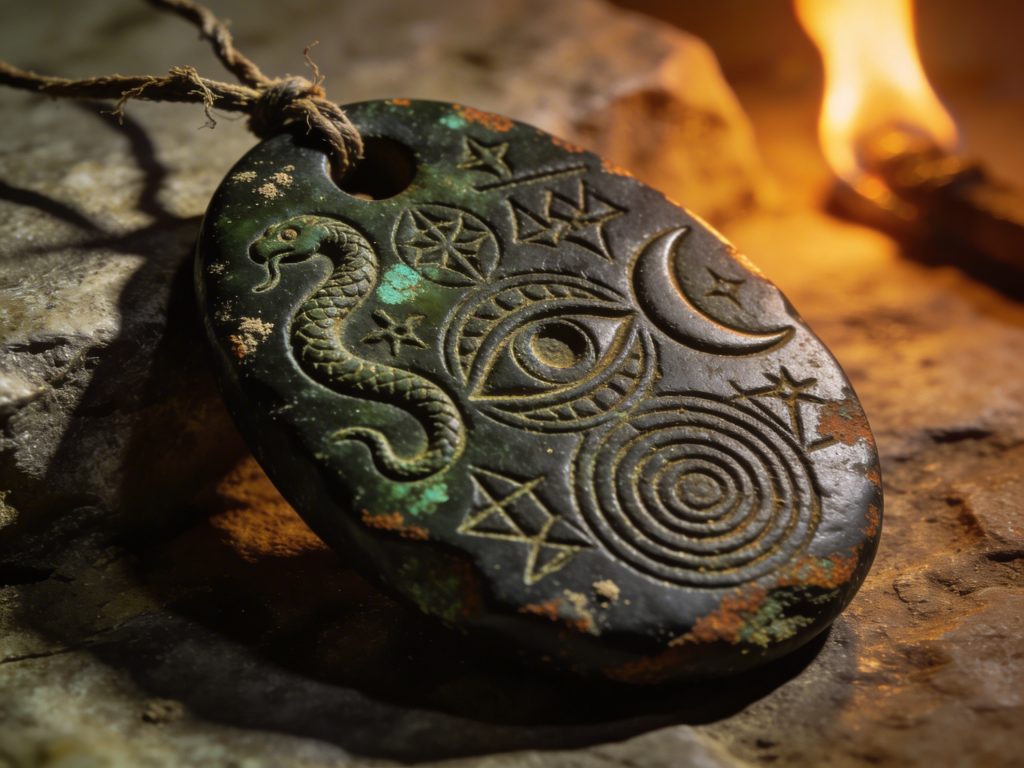
Long before the first page of Scripture was penned, human beings were fashioning small objects and investing them with spiritual power. The word talisman likely derives from the Greek telesma, meaning “a sacred rite or completion,” itself rooted in the Arabic tilasm. But the practice is older than any written language.
Archaeological evidence places the earliest known amulets in the predynastic Badarian period of ancient Egypt, persisting all the way through Roman times. In Siberia, perforated cave bear teeth dating back roughly 40,000 years have been identified as early protective amulets, demonstrating that the impulse to assign spiritual power to physical objects is among the oldest documented human behaviors. These were not innocent trinkets — they were theological statements. They announced that spiritual reality could be captured, concentrated, and controlled through the right material object.
Egypt, Babylon, and the Nations
In ancient Egypt, amulets were crafted from gold, silver, and precious stones and believed to protect the wearer from harm. Pregnant women wore figures of Taweret, the goddess of childbirth, to prevent miscarriage; after delivery they exchanged them for amulets representing Bes, the protector of children. These were not decorations — they were considered functional conduits of divine power.
Ancient gems were carved with the images of gods, bearing the names of deities like Serapis in Greek characters, so that the wearer could access the god’s particular powers through the object itself. In Mesopotamia and Babylon, written cuneiform amulets expanded this tradition, and by the Phoenician and early Hebrew periods, the practice had spread across cultures in recognizable patterns — lamellae of gold and silver, inscribed with names and incantations, worn or placed in homes as protections.
The Vikings wore amulets of bronze, iron, and gold engraved with symbols believed to bring luck, protection, and strength. Native American tribes fashioned amulets from animal teeth, bones, and feathers. Buddhist traditions developed talismanic amulets bearing the symbols of the Buddha as early as 485 B.C., and the practice continues in Thailand and Southeast Asia to this day. The pattern is strikingly universal — every pagan culture, in every era, has constructed a talisman tradition.
This universality should not comfort us. It should caution us. The fact that every human culture gravitates toward sacred objects only tells us something about the depth of human spiritual longing divorced from revealed truth — not about whether the practice is legitimate.
The Roman Catholic Sacramental System
It would be intellectually dishonest to address talismanic thinking in Pentecostal or charismatic streams without acknowledging that a sophisticated version of this impulse exists in Roman Catholic sacramental theology. Catholics use what they call sacramentals — holy water, crucifixes, blessed medals, rosary beads, and relics — as objects believed to confer grace or spiritual benefit through their use.
Holy water is perhaps the most well-known example. Blessed by a priest, it is used to bless individuals, spaces, and objects, and in popular practice (though not official dogma) is treated as a substance with inherent spiritual power to repel evil or cleanse sin. Historically, even some educated medieval Christians believed in the protective and healing power of blessed objects.
From a Protestant evangelical perspective grounded in Scripture alone (sola Scriptura), this is a serious theological problem — not because water is meaningless, but because of what is being claimed for it. Water has profound biblical symbolism: cleansing, new life, baptism. But biblical significance is not the same thing as intrinsic spiritual power. Scripture does not teach that water, once blessed by a religious authority, becomes a substance with automatic power to cleanse sin or repel demons. Spiritual purification comes through the blood of Christ; forgiveness comes by grace through faith; regeneration comes by the Holy Spirit — not by the application of any substance.
When people want concrete rituals — sprinkle this, wear that, place this here, say these words — they are often seeking something controllable, something they can hold in their hand. The gospel does not offer that. It offers repentance and faith in Jesus Christ.
What Scripture Says: A Clear Verdict
God did not leave His people guessing about these practices. He named them, condemned them, and explained why.
Deuteronomy 18:10–12 is the foundational text: “There shall not be found among you anyone who…practices divination or sorcery, interprets omens, engages in witchcraft, or casts spells, or who is a medium or spiritist or who consults the dead. Anyone who does these things is detestable to the LORD”. God’s specific reason is important — these nations were being expelled because they “listened to those who summoned the supernatural through inanimate objects”. Israel was to have no substitute for the living God.
1 Samuel 15:23 frames the stakes in terms even a casual reader cannot miss: “For rebellion is as the sin of witchcraft.” The issue at the heart of talismanic practice is not merely superstition — it is a usurpation of God’s sole sovereignty over the supernatural.
Isaiah 44:25 mocks those who trust in divination. Acts 19:18–19 records the dramatic repentance of believers in Ephesus who had practiced magic arts — they publicly burned their scrolls rather than keep objects associated with false spiritual power. That is the New Testament pattern: not tolerance, but renunciation.
Numbers 23:23 announces something vital: “There is no enchantment against Jacob, no divination against Israel”. God’s people are not protected by objects, charms, or rituals. They are protected by God Himself.
The Regulative Principle: Worship on God’s Terms
The theological framework that speaks most directly to this issue is the Regulative Principle of Worship — a hallmark of historic Protestant and Reformed theology. It states simply: the corporate worship of God is to be founded upon the specific directions of Scripture. The Westminster Confession of Faith (21.1) articulates it this way:
“The acceptable way of worshiping the true God is instituted by himself, and so limited by his own revealed will, that he may not be worshiped according to the imaginations and devices of men, or the suggestions of Satan, under any visible representation, or any other way not prescribed in the Holy Scriptures.”
Notice the language: “the imaginations and devices of men” and “the suggestions of Satan” are placed in the same category — anything added to worship beyond what Scripture authorizes. This is not legalism. It is a loving boundary God has drawn for our protection.
When someone introduces ribbon objects with a claimed anointing into the life of a local church, the first and most important question is simply: Where does Scripture teach this? If Scripture does not teach it, it does not belong. Allowing non-scriptural elements into worship is a slippery slope — what begins with well-meaning enthusiasm can gradually open the door to increasingly unbiblical practices.
Why This Is Genuinely Dangerous
This is not merely a theological debate about preferences. There are real spiritual dangers at stake.
First, it redirects faith from a Person to a thing. The moment a believer begins to invest spiritual trust in an object — however “anointed” it may be claimed to be — they have shifted their confidence from the living God to a created artifact. This is the definition of practical idolatry, regardless of the vocabulary used to describe it.
Second, it opens a door to spiritual harm. God did not forbid these practices arbitrarily. Assigning supernatural power to physical objects — even under a Christian label — is the same structural impulse that drives every occult system in history. The packaging changes; the underlying logic does not. Practices that mimic the form of occultism while claiming a Christian label are among the most deceptive, precisely because the discernment barrier is lowered by familiar language.
Third, it misleads the vulnerable. New believers, people in spiritual crisis, and those with limited biblical grounding are especially susceptible to practices that feel spiritually potent. When a church tolerates or platforms these things, it fails its most vulnerable members.
Fourth, it corrupts the gospel witness. A church known for ribbon talismans and magical objects has confused the world about the nature of Christianity. The power of the gospel is the risen Christ — not objects, not rituals, not ceremonies unsanctioned by Scripture.
Responding with Truth and Grace
So what do you do when someone — perhaps a guest speaker, a well-meaning friend, or even a longtime member — speaks as though these things are biblical and spiritually sound? The answer requires both a spine and a shepherd’s heart.
1. Start with good questions, not accusations.
Before concluding the worst, ask: “That’s an interesting idea — where in Scripture do you find support for that?” This approach is both honest and gracious. It invites the person to examine their own foundations without immediately placing them on the defensive. Often, people who have absorbed these practices have never been asked this simple question.
2. Listen charitably before you respond.
Jude 22 instructs us to be merciful to those who doubt. Do not be unkind or argumentative with those attracted to unusual spiritual ideas. Their longing for something tangibly spiritual is not wrong — it is misdirected. Address the misdirection without mocking the longing.
3. Teach the alternative, not just the prohibition.
The most powerful antidote to false teaching is not a refutation alone — it is a more glorious vision of the truth. When addressing the claim of “anointed” objects, open the Scriptures and show your people the magnificent reality of the indwelling Holy Spirit, the sufficiency of the blood of Christ, and the complete adequacy of the Word of God. Show them what they have in Christ — infinitely more than any object could offer.
4. Be specific about what was said and why it matters.
Vague concerns produce vague responses. Be specific about the statements that concern you and why they contradict Scripture. This is not nitpicking — it is precision in truth-telling, which is an act of love.
5. Protect the flock without publicly shaming the person.
If the concern involves a guest speaker or outside voice, address the content from the pulpit without necessarily naming the individual. If the person is a regular member or teacher, Matthew 18 and Galatians 6:1 provide the model: go privately first, gently, in a spirit of restoration.
6. Remember what is at stake.
Paul told the Galatians he was astonished that they were so quickly deserting “him who called you” — to turn from the biblical gospel is not merely to adopt a bad theological opinion; it is to turn from God Himself. That gravity should season both your urgency and your compassion.
A Closing Word to the Congregation
The people of God have always lived in a world that insists spiritual reality can be packaged, purchased, and worn around the neck. From the carved gems of Alexandria to the sacramentals of medieval Rome to the “anointed” objects circulating in some charismatic circles today, the impulse is the same — ancient, intuitive, and ultimately empty.
You have something incomparably better. You have the Word of God, which is living and active (Hebrews 4:12). You have the Spirit of God, who dwells within you (1 Corinthians 6:19). You have the intercession of Christ Himself at the right hand of the Father (Romans 8:34). You need no ribbon. You need no relic. You need no ritual unsanctioned by Scripture.
Guard what has been entrusted to you (1 Timothy 6:20). Hold fast to the Word. And when a strange voice speaks inside the fold, do not be afraid to say, gently and clearly: “Let us search the Scriptures and see if these things are so.”
Pastor Chris Carter serves as Senior Pastor of Priceville Baptist Church. This article is part of an ongoing commitment to biblical discernment and the shepherding of God’s people in truth.