
The Marks of a Healthy Church: What Acts 2:42–47 Demands of Us

By Pastor Chris Carter | Priceville Baptist Church, Tupelo, Mississippi April 5, 2026 | Series: 40 Weeks Through the Book of Acts
If you stripped your church down to the studs — no building, no budget, no programs, no praise band, no coffee bar, no social media page — what would be left?
Would there be anything worth keeping? Or would you be staring at an empty lot where something used to be?
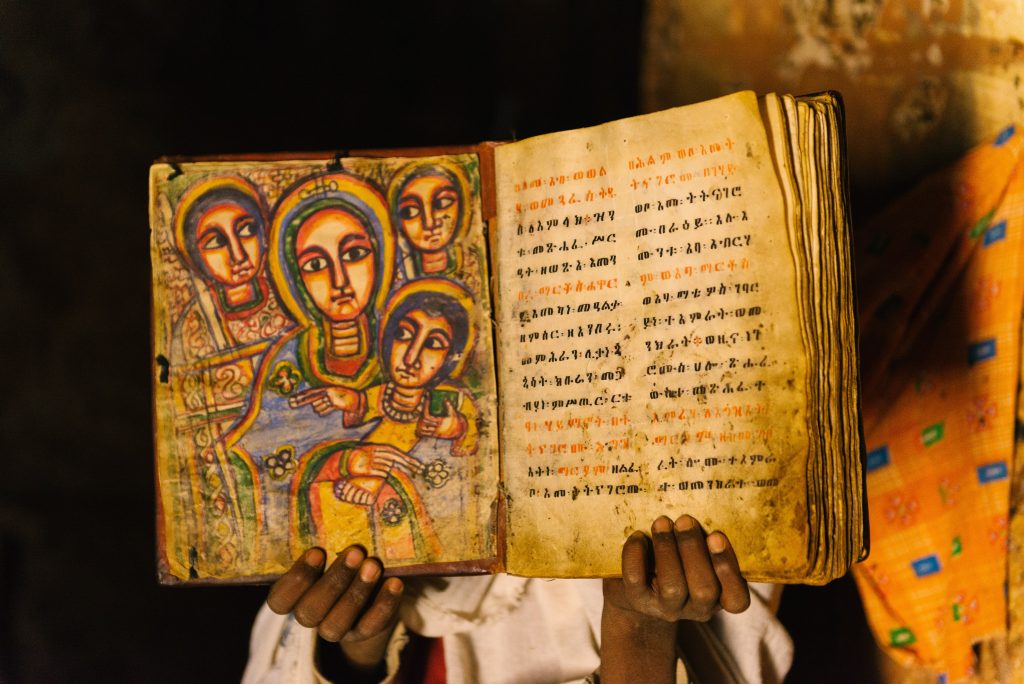
That’s not a hypothetical for millions of Christians around the world right now. Believers in China, Iran, North Korea, and parts of sub-Saharan Africa worship in living rooms, in fields, in secret. They have none of the things we consider essential to “doing church.” And yet many of them have something we desperately need: the kind of devotion that Luke describes in Acts chapter 2.
From Conversion to Community
Last time in our series through Acts, we watched three thousand people respond to Peter’s sermon with repentance, faith, and believer’s baptism. It was the most explosive day of evangelistic harvest in the history of the church. But a single day of conversions does not make a church.
Conversion is a moment. Church is a life.
Pentecost lit the fire. Acts 2:42–47 shows us what the fire looked like when it settled into a steady, daily flame. In just six verses, Luke paints God’s blueprint for congregational health — four marks of devotion and a promise that the Lord Himself would do the building.
Here is the text:
“And they devoted themselves to the apostles’ teaching and the fellowship, to the breaking of bread and the prayers. And awe came upon every soul, and many wonders and signs were being done through the apostles. And all who believed were together and had all things in common. And they were selling their possessions and belongings and distributing the proceeds to all, as any had need. And day by day, attending the temple together and breaking bread in their homes, they received their food with glad and generous hearts, praising God and having favor with all the people. And the Lord added to their number day by day those who were being saved.” — Acts 2:42–47 (ESV)
The question we need to wrestle with is not “Do we have these things on our church calendar?” but “Are we devoted to them?” Because there is a chasm between attending and being consumed.
Mark 1: Devoted to Apostolic Teaching
The first thing Luke tells us about this newborn church is that they devoted themselves to the apostles’ teaching.
That word “devoted” is worth slowing down for. In the Greek, it’s proskartereo — it means to persist, to be steadfastly attentive, to cling to something with tenacious endurance. Luke uses this same word back in Acts 1:14 to describe the disciples’ prayer life before Pentecost. This is not casual interest. This is the posture of people whose lives depend on what they’re hearing.
And the content they clung to was the apostles’ didache — their teaching. The apostles were not sharing opinions or religious philosophy. They were eyewitnesses of the life, death, and resurrection of Jesus Christ. Their teaching carried the weight of firsthand testimony confirmed by the Holy Spirit. As Paul would later write, the church is “built on the foundation of the apostles and prophets, Christ Jesus himself being the cornerstone” (Ephesians 2:20).
What we have today in the New Testament is the written deposit of that apostolic teaching — preserved, inspired, and sufficient. When we say a church should be devoted to the apostles’ teaching, we are saying the church must be governed by the Scriptures.
And there is a difference between a church that uses the Bible and a church that is governed by the Bible. In a church governed by the Word, the preaching is expository — the text sets the agenda. The decisions of the elders are measured against Scripture. The programs and priorities are evaluated by God’s mission, not the culture’s demands.
Here’s the diagnostic question: Is your church built on the Word, or has it built on something else and decorated it with the Word?
Mark 2: Devoted to Sacrificial Community and the Lord’s Table
The second and third marks Luke names are “the fellowship” and “the breaking of bread.” These are not two separate agenda items on a church calendar. They are the texture of a shared life.
The word koinonia is one of the most beautiful words in the New Testament — and also one of the most abused. We’ve reduced it to “fellowship hall” and potluck dinners. But koinonia means partnership, intimate sharing, joint participation in something sacred. Paul uses it in Philippians 3:10 to describe sharing in the sufferings of Christ. In 2 Corinthians 13:14, it describes the fellowship of the Holy Spirit Himself. This is not socializing. This is covenant life.
And look at what this fellowship produced:
“All who believed were together and had all things in common. And they were selling their possessions and belongings and distributing the proceeds to all, as any had need.” (vv. 44–45)
This was not government-mandated communism. This was voluntary, Spirit-produced generosity. Nobody had to pass a law. Nobody had to guilt them into giving. The Holy Spirit had so transformed their hearts that they looked at their possessions and said, “My brother’s need is more important than my comfort.”
This is the radical implication of the gospel for how we live together. If Christ gave His life for me, how can I cling to my stuff while my brother or sister goes without? The early church took the vertical reality of the cross and made it horizontal.
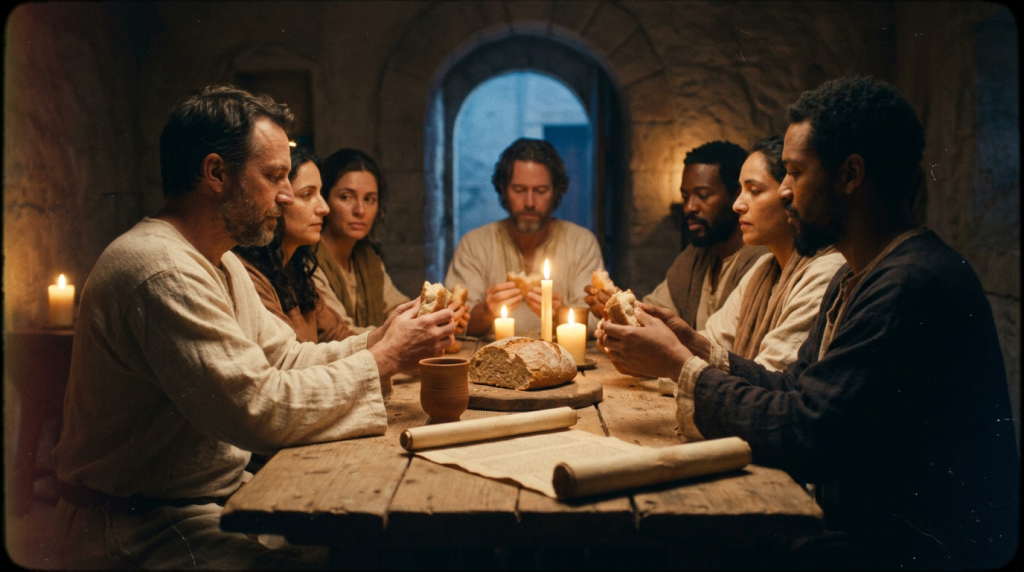
Woven into this shared life was the breaking of bread — both ordinary meals and the Lord’s Supper. They ate together daily, house to house, with “glad and generous hearts, praising God” (v. 46). The Lord’s Table was not a quarterly ritual observed in awkward silence. It was the heartbeat of their common life — a constant, reverent reminder that they were one body because they shared in one Lord’s broken body.
Think about your family dinner table growing up. The meals themselves were simple. But what happened around the table — the conversation, the laughter, the hard talks — that’s what built the family. The early church was like that. Simple food. Deep communion. The presence of Jesus recognized in the breaking of bread, just as the two disciples recognized Him at Emmaus (Luke 24:30–35).
And here’s what that kind of community produced: “Awe came upon every soul” (v. 43). The Greek is phobos — reverent fear. When the Spirit is genuinely at work in a community of real devotion, even outsiders can feel the weight of God’s presence. They were “having favor with all the people” (v. 47a). The watching world looked at this community and could not explain it away. Their love was so visible, so tangible, that it earned the respect of those who had not yet believed.
If an outsider spent a week watching your church — not just the Sunday service, but how you treat each other Monday through Saturday — would they see koinonia? Or would they see a group of people who occupy the same building once a week?
Mark 3: Devoted to Prayer — and God Provides the Growth
The fourth mark is “the prayers.” Notice the definite article — “the prayers,” not just “prayer.” This likely refers to set times of corporate prayer, both in the temple courts and in homes. The early church did not treat prayer as the opening ceremony before the real program. Prayer was the program. Prayer was the engine. Everything else was the exhaust.
This echoes exactly what we saw in Acts 1:14 before Pentecost: they were devoted with one accord to prayer. The pattern is consistent throughout the Book of Acts — the church advances on its knees. When the apostles face opposition in Acts 4, their first response is not a strategy meeting; it’s corporate prayer. The room shakes. They are filled with boldness. The Word goes forward.
A car with no gas looks the same as a car with a full tank. Same design. Same paint. Same wheels. But only one of them is going anywhere. A prayerless church may look religious on the outside, but it cannot accomplish what God has called it to do. Prayer is the fuel of the mission.
And now we come to the most important sentence in the passage:
“And the Lord added to their number day by day those who were being saved.” (v. 47b)
The Lord added. Not the preacher. Not the outreach committee. Not the welcome team. The Lord added to the church those who were being saved. The Greek participle sozomenous is present tense — it describes an ongoing process of salvation. God was continually drawing people to Himself through this community.
This is where our theology anchors us. We do not manufacture conversions. We do not produce church growth through better marketing. God saves. God adds. God builds His church. As Paul writes in 1 Corinthians 3:6–7, “I planted, Apollos watered, but God gave the growth. So neither he who plants nor he who waters is anything, but only God who gives the growth.”
Notice what is absent from this passage. There is no mention of a strategic plan. No mention of a growth campaign. No mention of cultural relevance strategies. The most effective church in history grew because God did the building while His people did the obeying. This does not mean planning is wrong — it means planning without prayer and devotion is futile.
Our job is faithfulness to the marks — teaching, fellowship, the Table, prayer. The harvest belongs to the Lord.
But What About…?
Whenever you hold up a biblical standard, people start building escape routes. Let me name three objections I hear most often and hold them up to the light.
“This was a unique moment in history. You can’t expect the modern church to look like Acts 2.”
There’s a grain of truth here. Pentecost was a unique, unrepeatable event. The apostolic signs served a specific confirmatory purpose. But the four marks Luke emphasizes — teaching, fellowship, breaking bread, prayer — are not historically conditioned. They are not miraculous. They are the normal, ongoing practices of every healthy church. The New Testament epistles, written decades later, repeat every one of these marks as the standard for church life (Hebrews 10:24–25; 1 Timothy 4:13; 1 Corinthians 11:23–26; Colossians 4:2). Luke is describing the norm, not an anomaly.
“You’re being idealistic. Every church has problems.”
Absolutely. Luke himself will show us those problems — Ananias and Sapphira in chapter 5, the disputes of chapter 6, the theological controversies of chapter 15. He is not naive. But the fact that every church falls short of the standard does not mean we lower the standard. A doctor does not stop defining health because every patient has ailments. The definition of health is what tells you where the ailment is. Acts 2:42–47 is God’s definition of congregational health. If we throw it out as “idealistic,” we have no diagnostic tool left.
“We already do all of this. We have Sunday School, potlucks, and we pray before the offering.”
This might be the most dangerous objection, because it confuses the form with the substance. Having a Sunday School class on the calendar is not the same as a congregation that is devoted to the apostles’ teaching. Having a quarterly potluck is not the same as a community where people sell possessions to meet each other’s needs. Praying before the offering is not the same as the prayers — corporate, persistent, Spirit-dependent intercession that shakes the foundations.
The word proskartereo is Luke’s diagnostic tool. He didn’t say they “attended” the apostles’ teaching. He didn’t say they “participated” in fellowship. He said they devoted themselves. They persisted. They clung. There is a chasm between checking a box and being consumed by a calling.
The question is not whether our church has these things. The question is whether our church is devoted to them.
Three Things You Can Do This Week
Let me bring this down to the ground level — not ideas, not principles, but things you can actually do in the next seven days.
1. Get Under the Word — Not Just Near It. Read Acts 2:42–47 once every day this week. It’s six verses. It will take you ninety seconds. But each day, ask God to show you where your own spiritual life measures against this blueprint. Rate yourself on the four marks: teaching, fellowship, the Table, prayer. Where are you devoted? Where are you merely attending? If you’re not in a Bible study or small group, make this the week you join one (Psalm 1:1–3).
2. Meet One Need You Didn’t Have To. Identify one person in your church or community who has a practical need — groceries, a bill, a meal, a ride, a conversation — and meet it. Don’t wait for a program or a committee. Call someone by name. Write a check. Show up with a casserole. The kingdom advances through a thousand small acts of sacrificial love (1 John 3:17–18).
3. Pray for Your Church by Name. Set aside five minutes each day this week to pray specifically for your church. Pray for your pastor by name. Pray for three families in your congregation. Pray that God would make your church a community so devoted to teaching, fellowship, the Table, and prayer that the watching world would ask, “What is different about those people?” Pray Acts 2:47 over your congregation: “Lord, add to our number those who are being saved” (Colossians 4:2–4).
A Final Word
We spend a lot of time in the American church talking about growth strategies and relevance and reaching the next generation. And none of those conversations are necessarily wrong. But Acts 2:42–47 quietly reminds us that the most effective church in history didn’t have a strategy. They had devotion. They had each other. They had the Word, the Table, and unceasing prayer. And God did the rest.
If you feel like something is missing in your spiritual life or in your church, maybe the answer isn’t a new program. Maybe the answer is an old devotion — renewed, recovered, and taken seriously again.
The early church didn’t set out to change the world. They set out to be faithful to what Jesus left them. And the world was changed anyway.
Because that’s what happens when God builds the house.
“Unless the Lord builds the house, those who build it labor in vain.” — Psalm 127:1
About This Series: 40 Weeks in Acts is an expository sermon series walking through the entire Book of Acts at Priceville Baptist Church, Tupelo, Mississippi, from February to November 2026. Join us Sundays at 10:30 AM to go deeper into God’s word!
Next Week: In the Name of Jesus: Power for Healing and Witness — Acts 3:1–10. What happens when a devoted church walks out the door and into the city?