
My Thoughts on the Ethiopian Bible

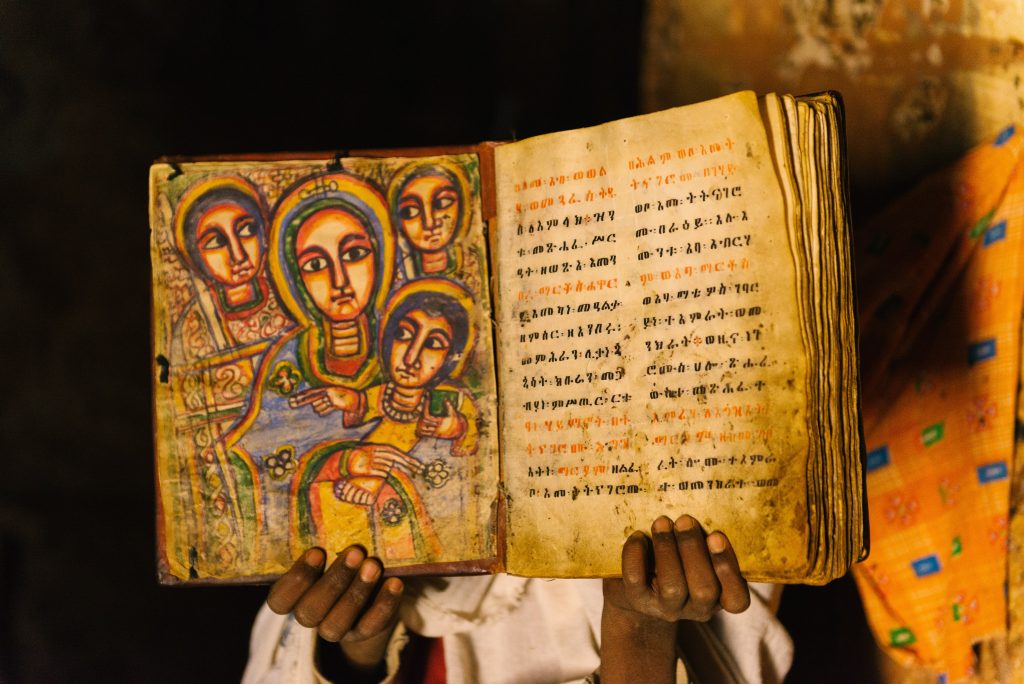
I was recently asked where I stood concerning the Ethiopian Bible and the claims of the Ethiopian church that it is the oldest Bible in the world. What follows below are my thoughts.
A Good Question That Deserves a Thoughtful Answer
This is a question I hear more and more, and I’m glad people are asking it. It shows you’re thinking carefully about God’s Word, and that’s always a good thing. So let’s walk through this together.
The Ethiopian Orthodox Church has been around for a very long time—since the 4th century. It’s a real church with a real history, and we should respect that. But their Bible is quite a bit bigger than ours. While our Bible has 66 books, the Ethiopian Bible has 81 (and some people count it as high as 84). That’s a big difference, and it’s worth understanding why.
You may have seen posts on social media claiming that the Ethiopian Bible is the “real” Bible, or that the church in the West removed books to hide the truth. Those claims sound exciting, but they don’t hold up when you look at the actual history. Let me show you why.
What Does the Ethiopian Bible Add?
The Ethiopian Bible includes everything in our 66 books, plus a number of extra writings. Some of the most talked-about additions include:
1 Enoch — A long book about angels, demons, and the end times, written as if by the Enoch mentioned in Genesis 5. It’s an interesting book, but as we’ll see, being interesting doesn’t make something Scripture.
Jubilees — A retelling of the stories from Genesis through Exodus, with a lot of extra rules and a different calendar added in.
The Sinodos, the Book of the Covenant, and Ethiopic Clement — These are collections of church rules and instructions that claim to come from the apostles, but were actually written many centuries later.
Why Don’t We Accept These Extra Books?
1. The Early Church Didn’t Accept Them
Here’s something really important to understand: the early church didn’t sit down one day and decide which books were Scripture. Instead, the churches that had been planted by the apostles recognized which books already carried the authority of God. It was more like discovering than deciding.
And when you look at what those early churches recognized—from North Africa to Rome to Syria to Egypt—none of them included books like 1 Enoch, Jubilees, or the Sinodos. The Ethiopian church came to accept these books later, and they did so in isolation. After Islam spread across North Africa and the Middle East, the Ethiopian church was largely cut off from the rest of Christianity for centuries. Their canon grew during that time, without any checks or balances from other believers.
2. These Books Don’t Come from Prophets or Apostles
One of the most basic tests of a biblical book is this: Who wrote it? Was it a prophet who spoke for God, or an apostle who was sent by Christ? The books unique to the Ethiopian Bible don’t pass this test. Most of them were written anonymously, or they were written by someone pretending to be a famous figure like Clement or the apostles. That’s called pseudepigraphy—writing under a false name—and it was a common practice in the ancient world. But it’s not how God delivered His Word.
3. We Can’t Verify the Text
When scholars study the New Testament, they can compare thousands of manuscripts in Greek, Latin, Syriac, and other languages. That’s how we know our Bible has been carefully preserved over the centuries. But many of the books unique to the Ethiopian Bible exist only in Ge’ez—the ancient Ethiopian language. There are no copies in Greek or Hebrew or any other language to compare them to. That makes it very hard to know whether the text has been accurately handed down.
1 Enoch is a partial exception. Pieces of it were found among the Dead Sea Scrolls in Aramaic. But even those fragments show differences from the Ethiopian version, which raises more questions than it answers.
4. Some of These Books Teach Things That Conflict with Scripture
Here’s where it gets really practical. We believe that Scripture doesn’t contradict itself—that’s what theologians call “the analogy of faith.” The Bible is one unified message from God. But some of the Ethiopian additions introduce ideas that don’t line up with the rest of the Bible.
For example, 1 Enoch contains detailed stories about fallen angels and heavenly secrets that go far beyond anything taught in the Old or New Testament. Jubilees adds commands and rules that aren’t found anywhere in the five books of Moses. If we believe that God’s Word is complete and consistent, these additions are a problem.
5. The Ethiopian Church Developed Along a Different Theological Path
In AD 451, the Council of Chalcedon made an important statement about who Jesus is: He is fully God and fully man, with two natures united in one person. The Ethiopian church rejected that decision. They hold to what’s called Miaphysite Christology—the belief that Jesus has one combined nature rather than two distinct natures.
Now, does that automatically mean everything in their Bible is wrong? No. But it does mean that the theological lens they used to decide what belongs in Scripture was different from what the vast majority of Christians have held for over 1,500 years. And that matters when we’re asking, “Can we trust their judgment on the canon?”
6. Going Back to the Sources Points Us to 66 Books
During the Reformation, there was a rallying cry: ad fontes—“back to the sources!” The Reformers said, “Let’s go back to the original Hebrew Old Testament and the original Greek New Testament and build our faith on what God actually gave us.”
When you do that, the Ethiopian additions simply aren’t there. They’re not in the Hebrew Scriptures that Jesus read in the synagogue. They’re not in the Greek writings that Paul and Peter and John circulated among the churches. If we take seriously the idea of going back to the sources, the trail leads to 66 books—not 81.
But What About…?
“Isn’t the Ethiopian Bible the oldest Bible in the world?”
You’ll hear this one a lot. It’s partly true: the Garima Gospels, kept in an Ethiopian monastery, are some of the oldest surviving copies of the Gospels, possibly dating to the 4th or 5th century. That’s amazing! But those are copies of Matthew, Mark, Luke, and John—books that are already in our Bible. Having old copies of the Gospels doesn’t prove that Jubilees or the Sinodos should be in the Bible too.
“Doesn’t Jude quote from 1 Enoch? Doesn’t that make it Scripture?”
Jude 14–15 does contain a passage that sounds a lot like 1 Enoch 1:9. But quoting something doesn’t mean you’re calling it Scripture. The apostle Paul quoted a pagan poet in Acts 17:28 when he said, “For we are indeed his offspring.” He also quoted a Cretan poet in Titus 1:12. Nobody thinks those pagan poems belong in the Bible. An inspired writer can use a true statement from a non-biblical source without making that source part of God’s Word.
“Didn’t the Western church remove these books to hide the truth?”
This is probably the most common claim you’ll run into, and it’s simply not true. You can’t remove something that was never there in the first place. The books unique to the Ethiopian canon were never part of the Bible used by the churches in Rome, Alexandria, Antioch, or Jerusalem. There was no secret meeting where powerful men took books out. The early church recognized the books God had given them, and these extras weren’t among them.
So Where Does That Leave Us?
I want to be really clear about something: we’re not saying the Ethiopian church isn’t real, or that Ethiopian Christians don’t love Jesus. Many of them do, and their faith has endured incredible hardship over the centuries. We can respect their history while still disagreeing with their canon.
As Baptists, we believe the Bible is the final authority for everything we believe and practice. And we believe that the 66 books of the Old and New Testaments are the complete Word of God—no more and no less. Those 66 books were written by prophets and apostles under the inspiration of the Holy Spirit. They were recognized by the earliest churches. And they are perfectly consistent with one another.
We don’t need to be nervous when someone brings up the Ethiopian Bible. We don’t need to feel like something has been hidden from us. God has given us everything we need in the Scriptures we already have. And that’s not just our opinion—it’s what the Bible says about itself:
“All Scripture is breathed out by God and profitable for teaching, for reproof, for correction, and for training in righteousness, that the man of God may be complete, equipped for every good work.” — 2 Timothy 3:16–17 (ESV)
If you have more questions about this, I’d love to talk it through with you. That’s what your pastor is here for.