
Repent and Turn: What Peter’s Temple Sermon Demands of Us Today

This article is adapted from Sermon 8 in our forty-week expository journey through the Book of Acts.
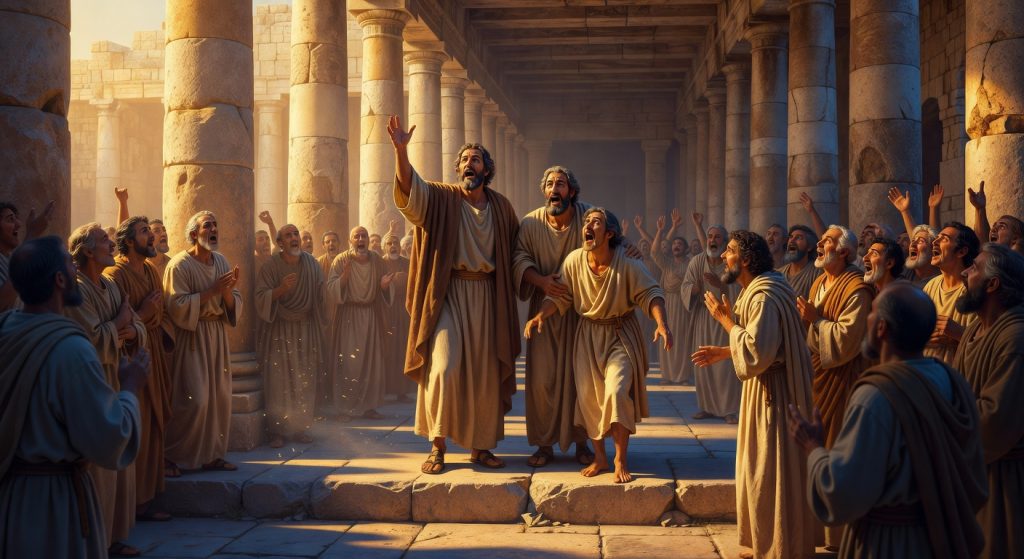
A man who had never walked a day in his life just leaped to his feet and started praising God in the middle of the temple. The crowd couldn’t believe what they were seeing. They came running, mouths open, hearts racing, trying to make sense of what just happened.
And then Peter opened his mouth.
Not to take a bow. Not to start a healing ministry. Not to sell tickets or pass around a collection plate. Peter did the one thing that separated him from every other wonder-worker in the ancient world — he pointed every eye away from himself and straight toward Jesus.
That’s what we find in Acts 3:11–26. This passage is Peter’s second major sermon in the book of Acts, and it may be the most direct gospel appeal in all of Scripture. Peter doesn’t sugarcoat. He doesn’t hedge. He tells a crowd of devout Jewish worshipers that they handed over and killed the Author of life — and then he tells them there’s still time to turn around.
When the Spotlight Finds You
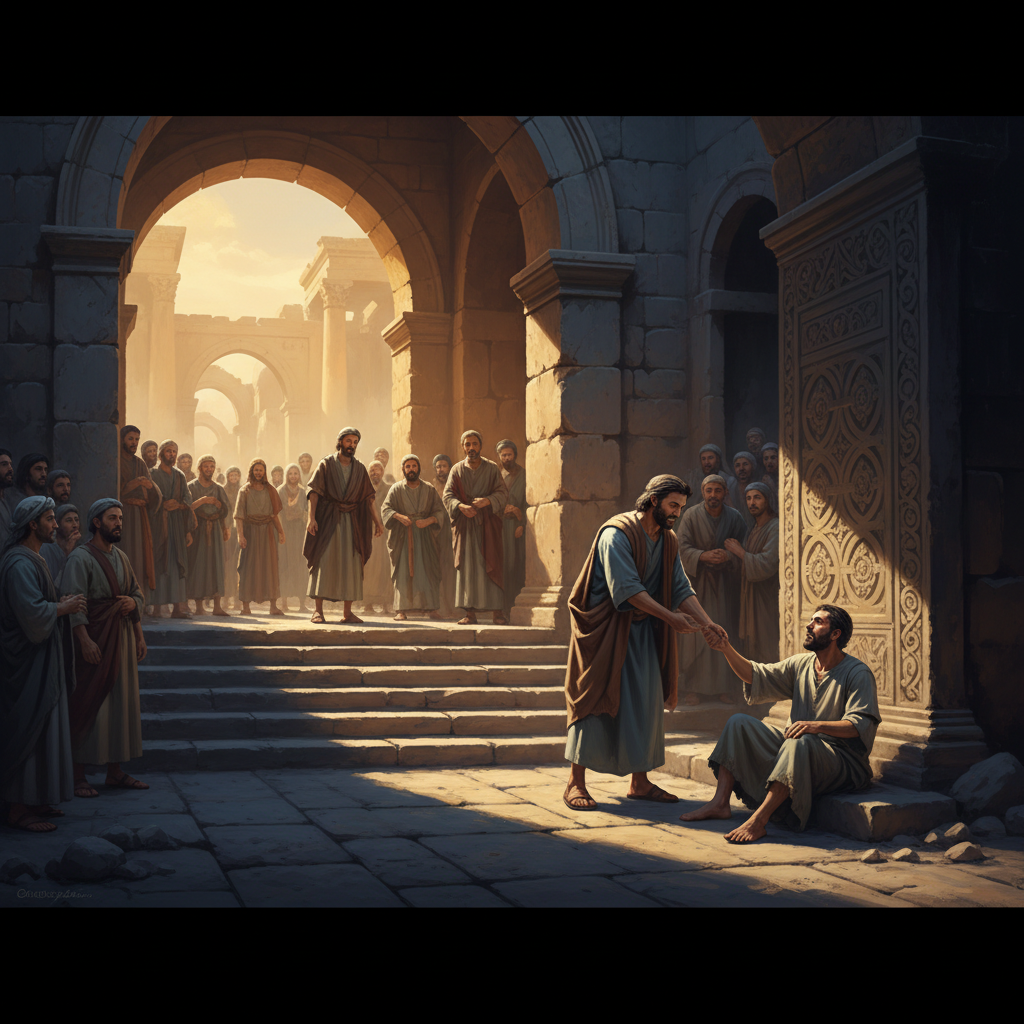
The miracle at the Beautiful Gate had done its work. A man lame from birth was now walking and leaping and clinging to Peter and John in Solomon’s Portico, and everyone in the temple courtyard was staring.
Luke tells us in Acts 3:12 that Peter saw the crowd and immediately asked them a question: “Men of Israel, why do you marvel at this? Why do you stare at us, as though by our own power or godliness we made him walk?”
That question matters more than we might think. Peter had just done something extraordinary, and the crowd was ready to celebrate him. In our day, this is the moment when someone launches a brand, starts a podcast, and monetizes the miracle. But Peter does the opposite. He deflects the attention immediately.
This is the pattern of every Spirit-filled servant in Scripture. Moses pointed to God. Elijah pointed to God. John the Baptist said, “He must increase, but I must decrease.” Peter stands in that same line and says, “Don’t look at us. Look at the God of Abraham, Isaac, and Jacob. Look at Jesus.”
If you have ever done something good — helped someone, led someone to faith, served in a way that drew attention — you’ve faced this same test. What do you do with the spotlight when it finds you? Peter shows us: you redirect it. Every time.
The Hardest Sermon Peter Ever Preached
What comes next in Peter’s sermon is breathtaking in its honesty. Standing in front of a Jewish audience in the temple — the very place where many of these people had called for Jesus’ death just weeks earlier — Peter says the thing nobody wanted to hear.
In verses 13–15, he makes four devastating statements. First, that God glorified His servant Jesus. Second, that they delivered Jesus over and denied Him in the presence of Pilate, even when Pilate wanted to release Him. Third, that they denied the Holy and Righteous One and asked for a murderer — Barabbas — instead. And fourth, that they killed the Author of life, but God raised Him from the dead.
Each statement hits harder than the last. Peter is not being cruel. He is being truthful. And truth, when it exposes sin, always stings before it heals.
Notice the title Peter gives Jesus: “the Author of life.” The Greek word is archēgos — it means the originator, the pioneer, the one who leads the way. Peter is saying that the very One who is the source of all life, the One through whom every heartbeat and every breath exists, was put to death by human hands. And yet death could not hold Him. God raised Him up.
This is the scandal of the gospel. The Creator was killed by His creatures. The Author of life was murdered. And the resurrection is God’s thundering verdict that Jesus is exactly who He claimed to be.
Peter’s Tender Turn
If Peter had stopped at verse 15, the sermon would have been nothing but accusation. But Peter doesn’t stop there. In verses 17–18, something shifts. His tone softens. He says, “And now, brothers, I know that you acted in ignorance, as did also your rulers. But what God foretold by the mouth of all the prophets, that his Christ would suffer, he thus fulfilled.”
There it is. The sovereignty of God and the responsibility of man, held together in two sentences. They sinned — and they sinned in ignorance. God ordained it — and God fulfilled His plan through their actions. This is not a contradiction. This is the mystery at the heart of the gospel.
God did not cause their sin. But God used their sin to accomplish the greatest act of salvation in the history of the world. The cross was not an accident. It was not Plan B. It was the plan before the foundation of the world, and Peter wants the crowd to know that even their worst act cannot escape the reach of God’s grace.
The Call That Still Echoes
Then comes the centerpiece of the sermon — Acts 3:19–20: “Repent therefore, and turn back, that your sins may be blotted out, that times of refreshing may come from the presence of the Lord.”
Two words anchor this verse: repent and turn. In the original Greek, metanoēsate means to change your mind — not just to feel sorry, but to think differently about God, about sin, and about yourself. And epistrepsate means to turn around, to reverse direction, to go a completely different way.
Repentance is not just regret. Everyone regrets getting caught. Repentance is a complete change of direction. It is the moment when you stop walking away from God and start walking toward Him. It is the moment when you say, “I was wrong. He is right. And I’m going His way now.”
And look at what Peter promises will follow: “that your sins may be blotted out.” That word “blotted out” means wiped clean, erased, smeared away like chalk from a blackboard. Your record — every failure, every rebellion, every secret sin — completely removed.
But there’s more. Peter also promises “times of refreshing from the presence of the Lord.” This is a beautiful phrase that means seasons of renewal, spiritual rest, and restored communion with God. Repentance is not just about escaping punishment. It’s about entering into a life where God’s presence brings refreshment to your weary soul.
Jesus Is the One Moses Told You About
In verses 22–26, Peter connects Jesus directly to the Old Testament promises that every person in his audience grew up hearing. He quotes Moses from Deuteronomy 18:15: “The Lord God will raise up for you a prophet like me from your brothers. You shall listen to him in whatever he tells you.”
Peter is saying: the Messiah you’ve been waiting for? He already came. And you missed Him. But it’s not too late.
He then broadens the scope even further: “And all the prophets who have spoken, from Samuel and those who came after him, also proclaimed these days.” In other words, everything in the Old Testament — every prophecy, every promise, every shadow and type — was pointing to Jesus. He is not a footnote in God’s story. He is the main character.
Peter closes with a statement that should stop us in our tracks: “God, having raised up his servant, sent him to you first, to bless you by turning every one of you from your wickedness.”
God sent Jesus to bless you. And the greatest blessing He offers is not health, not wealth, not comfort — it is turning you from your wickedness. The greatest gift God gives is a new heart and a new direction.
A Moment for Reflection
Before you move on, sit with these questions for a few minutes. Don’t rush. Let them do their work.
1. Where am I taking credit that belongs to God? Peter refused the spotlight. Is there an area of your life — your career, your parenting, your ministry — where you’ve been accepting praise that should go to Jesus?
2. Am I willing to hear the hard truth about my sin? Peter’s audience had to face what they did to Jesus. What sin in your life have you been excusing, minimizing, or ignoring? Are you willing to hear God’s honest assessment?
3. What does “turning back” look like for me this week? Repentance is not a feeling. It’s a direction. What specific step can you take this week to turn away from something that pulls you from God and toward something that draws you closer?
4. Do I believe that my sins can really be blotted out? Some of us carry guilt like luggage we refuse to set down. Peter says your sins can be erased. Do you believe that? If not, what’s keeping you from trusting God’s promise?
Suggested Scripture Readings for the Week
Use these passages to go deeper into the themes of this week’s sermon. Read one each day and ask God to speak to you through His Word.
Monday: Acts 3:11–26 — Read Peter’s temple sermon in full and slowly.
Tuesday: Deuteronomy 18:15–19 — The prophecy of a prophet like Moses, fulfilled in Jesus.
Wednesday: Isaiah 53:1–12 — The suffering servant who was crushed for our iniquities.
Thursday: 2 Corinthians 5:17–21 — If anyone is in Christ, he is a new creation.
Friday: Psalm 51:1–17 — David’s prayer of repentance and the heart God will not despise.
Saturday: Ezekiel 36:25–27 — God’s promise of a new heart and a new spirit.
Sunday: Revelation 21:1–5 — The restoration of all things, when God makes everything new.
Your Call to Action This Week
1. Redirect the spotlight. This week, when someone compliments you or praises your work, practice Peter’s response. Say something like, “I’m grateful — God has been good to me.” Make it a habit to point people toward Christ instead of collecting praise for yourself.
2. Name your sin honestly. Find a quiet place — your car, your back porch, your closet — and talk to God honestly about one area where you’ve been living in disobedience. Don’t dress it up. Don’t explain it away. Call it what it is, and ask Him to forgive you.
3. Take one step of repentance. Repentance is not just words. It’s a turn. If you’ve been holding a grudge, write a text of forgiveness. If you’ve been neglecting prayer, set an alarm for five minutes tomorrow morning. If you’ve been avoiding church, commit to being here next Sunday. One step. That’s all it takes to start turning.
4. Share the promise. Someone in your life needs to hear that their sins can be blotted out. A coworker carrying guilt. A friend drowning in shame. A family member who thinks they’ve gone too far. This week, tell them what Peter told the crowd: it’s not too late. Jesus is still offering forgiveness. Turn to Him.
You’re Invited
Join us this Sunday, April 26, 2026, at 11:00 AM as Pastor Chris Carter continues our journey through the book of Acts with “Repent and Turn: Peter’s Temple Sermon” from Acts 3:11–26.
Priceville Baptist Church 713 North Feemster Lake Road | Tupelo, Mississippi 38804
Whether you’ve been walking with Jesus for decades or you’re hearing this for the first time, there is a place for you here. The same God who raised Jesus from the dead is still in the business of raising dead hearts to life. Come as you are. He’ll meet you where you are.