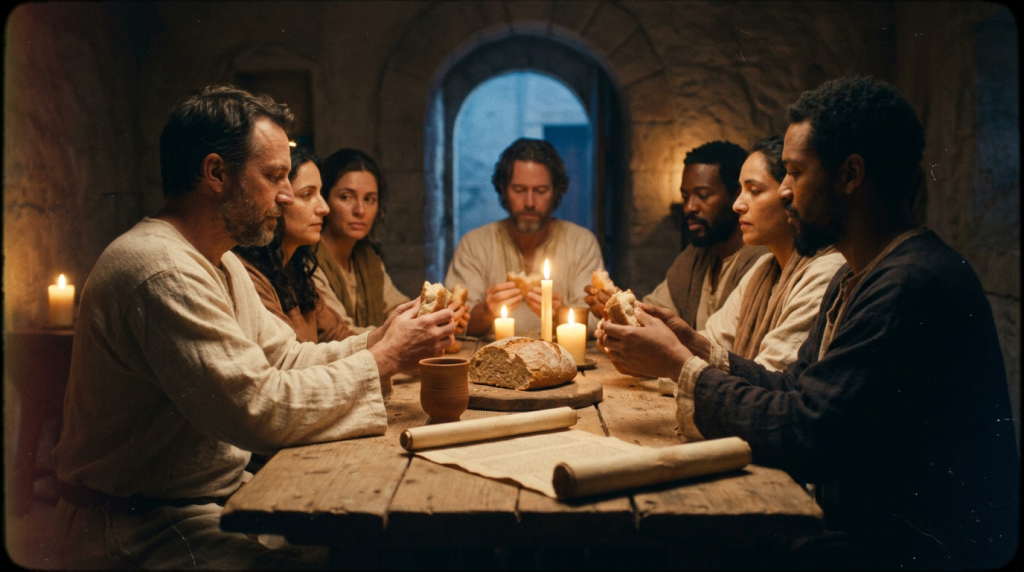

The Danger of Hypocrisy: What Ananias and Sapphira Teach Us About Lying to God

This article is adapted from Sermon 12 in our forty-week expository journey through the Book of Acts.
There is a story in the Bible that makes a lot of people uncomfortable.
It comes right after one of the most beautiful pictures of the early church we ever get. In Acts 4, we watched believers share everything they had. We met a man named Barnabas, who sold a field and laid every dollar at the apostles’ feet. The church was generous, joyful, and full of the Spirit.
Then chapter 5 opens with the word “but.”
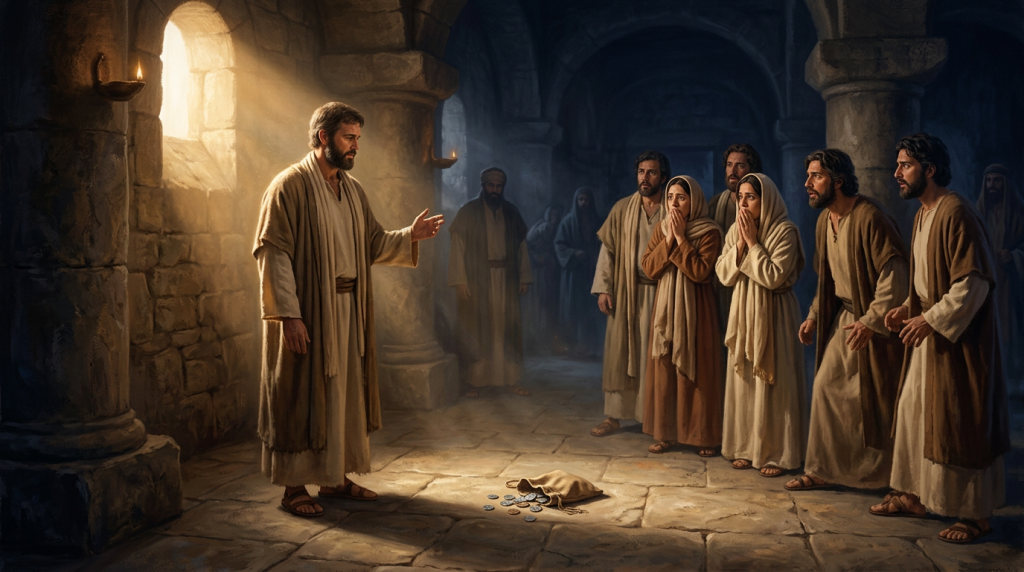
“But a man named Ananias, with his wife Sapphira, sold a piece of property” (Acts 5:1). And what happens next is so shocking that we almost want to skip past it. Two church members tell one lie. And both of them drop dead.
If that story makes you squirm, you are not alone. But I want to ask you to stay with me. Because this passage is not really about money. It is about the heart. It is about what God thinks of pretending. And it carries a warning every one of us needs to hear.
A Tale of Two Givers
Last week, in Sermon 11, we studied Acts 4:32–37 and met Barnabas. His name actually means “son of encouragement.” He sold a field and gave the money away, and Luke holds him up as a model of real generosity.
Luke does this on purpose. He shows us Barnabas at the end of chapter 4, and then he shows us Ananias at the beginning of chapter 5. He wants us to put the two men side by side. One gave honestly. The other faked it.
Here is the key: Ananias and Sapphira did not have to give anything at all. And even when they sold their land, they did not have to give all of it. Their sin was not that they kept some money. Their sin was that they pretended to give it all while secretly holding part back. They wanted the reputation of total devotion without the reality of it.
That is the definition of hypocrisy. The word comes from the Greek world of the theater. A hypocrite was an actor — someone who wore a mask and played a part. Ananias and Sapphira put on a mask in front of the whole church. And God removed it.
The Sin Behind the Sin
Look closely at what Peter says in Acts 5:3–4:
“But Peter said, ‘Ananias, why has Satan filled your heart to lie to the Holy Spirit and to keep back some of the price of the land? While it remained unsold, did it not remain your own? And after it was sold, was it not under your control? Why is it that you have conceived this deed in your heart? You have not lied to men but to God.'”
Did you catch that last line? “You have not lied to men but to God.”
Ananias thought he was fooling people. He was really lying to the Holy Spirit. And notice what Peter does without blinking: in verse 3 he says they lied to the Holy Spirit, and in verse 4 he says they lied to God. Peter uses those two names for the same Person. This is one of the clearest places in the whole Bible where we see that the Holy Spirit is fully God.
The Greek word for “kept back” is nosphizō. It means to secretly pocket something that does not belong to you — to embezzle. It is the very same word the Greek Old Testament uses for a man named Achan in Joshua chapter 7, who hid stolen treasure under his tent while pretending to be faithful. The connection is not an accident. God treats secret sin in His covenant people seriously, then and now.
Why Did God Respond So Strongly?
I will be honest with you. This is the hardest part of the passage. Ananias falls dead in verse 5. Three hours later, Sapphira walks in, repeats the lie, and falls dead too. Why would God do this?
Three things help us understand.
First, the timing matters. This was the birth of the church. When God established the priesthood in the Old Testament, two priests named Nadab and Abihu offered worship their own way and were struck down (Leviticus 10:1–2). At the start of something holy, God draws a clear line so His people will understand who He is. The church was just days old. This moment set the tone.
Second, the sin was against the Holy Spirit Himself. This was not a small fib. It was a calculated plan to deceive God’s people and grieve God’s Spirit, hatched in the heart (Acts 5:4) and carried out as a team (Acts 5:9).
Third, God was protecting His church. A little leaven works through the whole lump (1 Corinthians 5:6). If hypocrisy had been allowed to take root in the first weeks of the church, it could have rotted the whole thing. God loved His church too much to let that happen.
Notice the result in verse 11: “And great fear came over the whole church.” This is actually the first time Luke uses the word “church” — ekklēsia — in the book of Acts. And the church’s first lesson was the fear of the Lord.
Holy Fear Is a Gift, Not a Threat
We do not like the word “fear” much today. But the Bible says the fear of the Lord is the beginning of wisdom (Proverbs 9:10). This is not the fear of a child who is terrified of a cruel parent. It is the deep, healthy awe of a child who knows that God is real, God is holy, and God is not to be played with.
A church that has lost the fear of God will treat sin like a joke. A church that keeps the fear of God will treat God like He is God. The fear that fell on the early church did not scatter them. The very next verses tell us the church grew and that “all the more believers in the Lord… were constantly added to their number” (Acts 5:14). Holy fear purified the church, and a purified church grew.
That points us forward to next week. In Sermon 13, we will see this same bold, Spirit-filled, holy church face arrest and threats in Acts 5:12–42 — and keep right on preaching. The church that fears God rightly does not fear man.
What This Means for You and Me
You and I are probably not going to lie about a land sale. So how does this passage land on a Tuesday afternoon in Tupelo?
It lands on us every time we are tempted to look more spiritual than we really are.
It is the worship we sing with our mouths while our hearts are somewhere else. It is the “I’m doing great” we say at church when we are falling apart at home. It is the public generosity that covers private greed. It is the reputation we protect while we hide the sin no one knows about. All of it is a kind of mask. And God sees behind every mask.
The good news is this: you do not have to pretend with God. He already knows the truth about you, and He invites you to come clean. “If we confess our sins, He is faithful and righteous to forgive us our sins and to cleanse us from all unrighteousness” (1 John 1:9). The same God who judges hypocrisy welcomes the honest, broken heart.
So lay the mask down. It was never doing you any good anyway.
A Moment to Reflect
Take a few quiet minutes this week and ask yourself these questions. Be honest — that is the whole point.
- Where in my life am I tempted to look more spiritual on the outside than I really am on the inside?
- Is there a “secret” I am keeping that I have never confessed to God or to a trusted believer?
- Do I serve and give to be seen by others, or to honor the Lord (see Matthew 6:1–4)?
- Does my life show a healthy fear of God — an awe that takes Him seriously — or have I started treating Him casually?
Scripture Reading Plan for the Week
Walk through these passages, one per day, to go deeper into the themes of Acts 5:1–11.
- Monday: Acts 5:1–11 — Read the whole story again, slowly.
- Tuesday: Joshua 7:1–26 — Achan’s hidden sin and the same Greek word, kept back.
- Wednesday: Leviticus 10:1–7 — Holiness at the birth of the priesthood.
- Thursday: Psalm 139:1–24 — The God who searches and knows the heart.
- Friday: Matthew 6:1–18 — Jesus on giving, praying, and not performing for others.
- Saturday: 1 John 1:5–10 — The freedom of walking in the light and confessing sin.
- Sunday: Acts 5:12–16 — A preview of next week, and the church that grew in holy fear.
A Call to Action
Here are four steps to take this week.
- Take off one mask. Name one area where you have been pretending, and confess it honestly to God today.
- Tell one trusted person. Secret sin grows in the dark. Find a mature believer, your spouse, or a pastor, and let in some light.
- Examine your giving and serving. Ask the Lord to purify your motives so that what you do, you do for Him and not for applause.
- Recover your awe. Spend ten minutes reading about who God is (try Psalm 139 or Isaiah 6) and let it grow a healthy, worshipful fear of the Lord in you.
Join us this Sunday at 11:00 AM at Priceville Baptist Church, 713 North Feemster Lake Road, Tupelo, Mississippi, as we walk through Acts 5:1–11 together.