
Grief, Loss, and Suffering in the Family Circle


This is Week 33 in the Grace in Everyday Relationships Series.
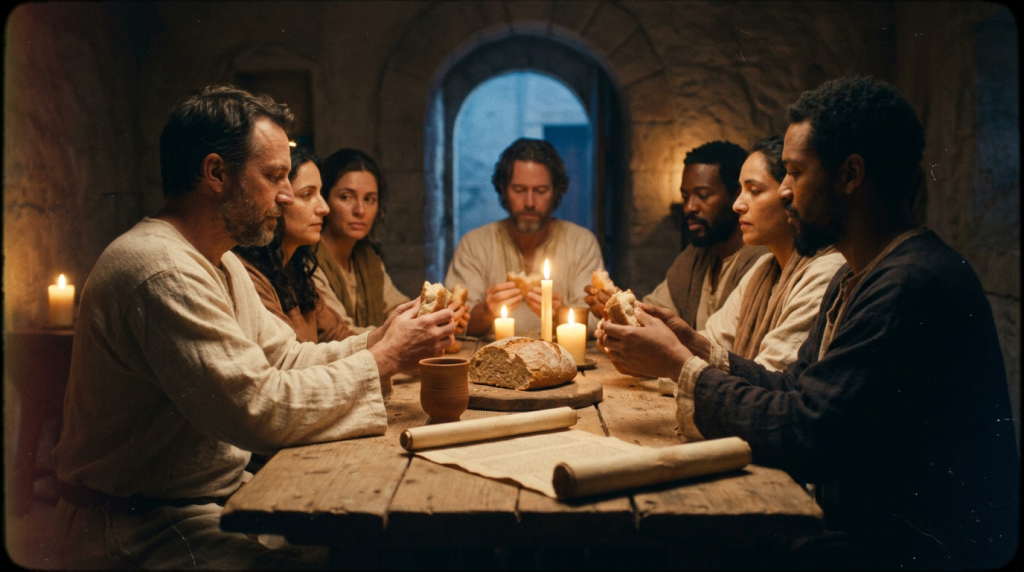
The empty chair at the table has a way of speaking, even when no one says a word. It might be the absence of a loved one who died this year, a grandparent who used to pray over the meal, a child lost to miscarriage, a sibling estranged after deep hurt, or a spouse whose illness keeps them in a bed instead of at the gathering. Laughter feels thinner. Silence feels heavier. Everyone wonders how to act—and some secretly wonder where God is in all of this.
Every family will face grief, loss, and suffering in some form. The question is not whether sorrow will visit your home, but what it will find when it arrives. Will family members grieve alone, turn on each other, or walk together—honest about pain, yet anchored in a living hope? Scripture does not minimize sorrow, and it does not leave believers without comfort. The Lord meets families in the valley, not just on the mountaintop, and invites them to receive His comfort and share it with one another.
God’s nearness and comfort in family grief
When sorrow settles in a family, the first truth to cling to is not a technique but a Person. Psalm 34:18 declares, “The Lord is near to the brokenhearted and saves the crushed in spirit.” That means when your heart feels shattered, He has actually drawn closer, not farther away. Psalm 23:4 pictures Him walking with His people “through the valley of the shadow of death,” rod and staff in hand—a shepherd who does not abandon the flock when the path runs through the dark places.
In the New Testament, Paul calls God “the Father of mercies and God of all comfort, who comforts us in all our affliction.” 2 Corinthians 1:3–4 says He does this not only for our sake, but so we “may be able to comfort those who are in any affliction, with the comfort with which we ourselves are comforted by God.” In other words, the comfort He pours into your family in its darkest hours is meant to spill over into the lives of others—starting with one another across your own table.
Families sometimes feel guilty for not being “stronger” in grief. Yet Scripture presents a God who moves toward the weak, the crushed, and the weeping. Strength, in His kingdom, often looks like honest dependence.
Grieving together, not alone or at odds
One of the hardest parts of family grief is how differently each person may express it. One sibling wants to talk often about the one who died; another goes quiet and withdraws. A parent cries easily; another stays busy with tasks. One wants to visit the grave; another finds the thought unbearable. These differences can quickly be misread: “You don’t even care,” “You’re trying to rush us past this,” “You’re stuck.”
It helps to name these differences out loud and to honor them. You might say, “I notice I like to talk about Mom a lot, and you tend to get quiet. Both ways of grieving are real. How can we love each other well in this?” Giving each other permission to grieve differently can lower suspicion and ease tension. Shared practices—sitting together in silence, looking at photos, telling stories, marking birthdays or anniversaries in simple ways—can create gentle spaces where everyone’s grief is welcome.
Biblical lament gives grief a voice before God. Families can read a lament psalm (like Psalm 13, 42, or 77) together, then pray its words in their own situation. Saying things like, “How long, O Lord?” or “Why have You forgotten me?” is not rebellion when voiced in faith; it is the heart of a child bringing real confusion to a trusted Father.
Loving suffering family members with presence, not platitudes
When someone in the family is suffering deeply—through bereavement, chronic illness, depression, or another crushing burden—it is natural to want to fix it. Yet often what hurting people most need is not explanations but presence.
Simple actions can carry enormous weight:
- Sitting quietly with a grieving spouse on the couch.
- Bringing a meal without expecting conversation.
- Offering, “I’m so sorry. I’m here. I love you,” rather than a string of explanations.
Well-intentioned phrases like “At least they’re in a better place,” “At least you can have more children,” or “God must have needed another angel” can actually deepen pain. They tend to minimize loss or put a spiritual gloss over wounds that are still open. Better to say less and stay longer than to say too much and back away.
Practical help is another powerful way to embody love. Grief and long-term suffering are exhausting. Offering to watch the kids, drive to appointments, help with paperwork, mow the lawn, or sit with a sick family member so a caregiver can rest communicates, “You’re not alone in this.” Always ask rather than assume, and be willing to hear, “Not today, but maybe later.”
Helping children and teens walk through family grief
Children feel family grief even when they cannot articulate it. They notice the empty chair, the whispered conversations, the change in mood. In love, adults sometimes try to shield them by saying little. But age-appropriate honesty usually serves them better.
That might sound like:
- “Grandpa died today. His body stopped working. We are very sad. Jesus promises to be close to us when we’re sad.”
- “The baby in Mommy’s tummy died. That’s why we’re crying. God knows our tears and cares.”
Invite questions; answer simply; admit when you do not know. Let your children see you cry and see you pray. Short Scriptures about God as Shepherd and Father, or about Jesus welcoming children, can anchor their hearts. Teens need space to ask harder questions, and they benefit deeply from adults who listen without panic or quick answers, then gently point them back to the character and promises of God.
When suffering doesn’t end quickly
Some family suffering is not a single event but a long road: chronic illness or disability, long-term mental health struggles, addiction, or extended unemployment. In these seasons, exhaustion and compassion fatigue can quietly move into the house. Resentment can creep in as one member carries more of the practical load or as long-term pain reshapes routines and limits activities.
Here, Romans 8:18–28 offers deep ballast. Paul speaks of “the sufferings of this present time” and the whole creation “groaning,” yet he also says the Spirit helps believers in their weakness and that God works in all things for the good of those who love Him. This does not make chronic hardship easy, but it assures families that their long season is not meaningless or unseen.
Practically, families in long-term suffering often need:
- Sustainable rhythms of care and rest, including breaks for primary caregivers.
- Help from extended family, friends, and church so burdens are shared.
- Permission to say “no” to some expectations or activities in order to remain faithful in the main things.
Receiving help is not failure; it is humility. It is also one way others get to live out the “one-another” commands of Scripture toward your family.
Holding on to hope when the pain stays
Christian hope is not positive thinking or pretending everything will work out nicely in this life. It is rooted in the death and resurrection of Jesus and His promise to make all things new. 1 Thessalonians 4:13–14 says believers “do not grieve as others do who have no hope,” precisely because Jesus died and rose again and will bring His people with Him. That means death and loss do not have the last word over your family story.
At the same time, Scripture is honest that the journey is long. Grief rarely moves in a straight line. Anniversaries re-open wounds; ordinary days suddenly sting. The Lord is patient with this. He does not measure your faith by how quickly you “bounce back.” Rather, He invites you, day by day, to bring fresh pain to Him, receive fresh mercy, and trust that one day He will wipe away every tear.
In the meantime, He often uses small, ordinary acts of care—within the family and from the wider body of Christ—to keep sorrow from turning into despair.
One small act of care in your family this week
You cannot fix all the grief or suffering in your family. That weight belongs to the Lord. But you can take one small, concrete step of love.
This week, consider:
- Calling a grieving relative just to listen.
- Writing a short note to a sibling walking through a hard season.
- Bringing a simple meal to a parent caring for a sick child.
- Sitting quietly with a spouse who is mourning, and asking, “How are you doing today?” then offering to pray for them out loud.
Ask the Lord to bring one person to mind. Then plan one act of care and carry it out, trusting that He delights to use small loaves and fishes in the hands of His children. The God of all comfort is near to your family in its grief, and He loves to work through you as an instrument of His compassionate presence.