
Servant Leadership and the Church That Refused to Split

What the First Church Did When Its First Conflict Came — A Walk Through Acts 6:1–7
Every growing thing eventually faces a growing pain. A small business that doubles its customers suddenly cannot keep up with the orders. A family that welcomes a new baby has to rethink the whole household. And a church that keeps adding people will, sooner or later, bump into a problem it has never faced before.
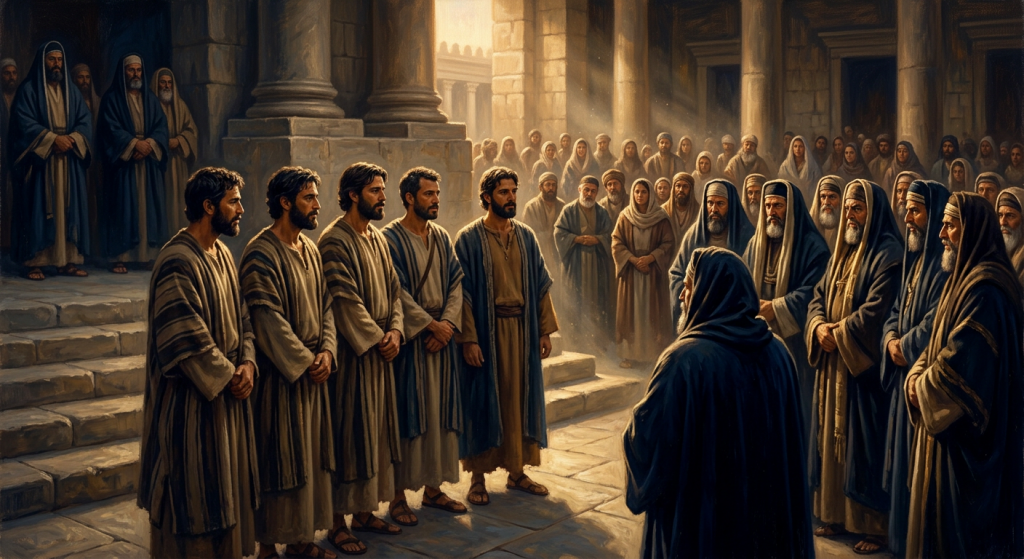
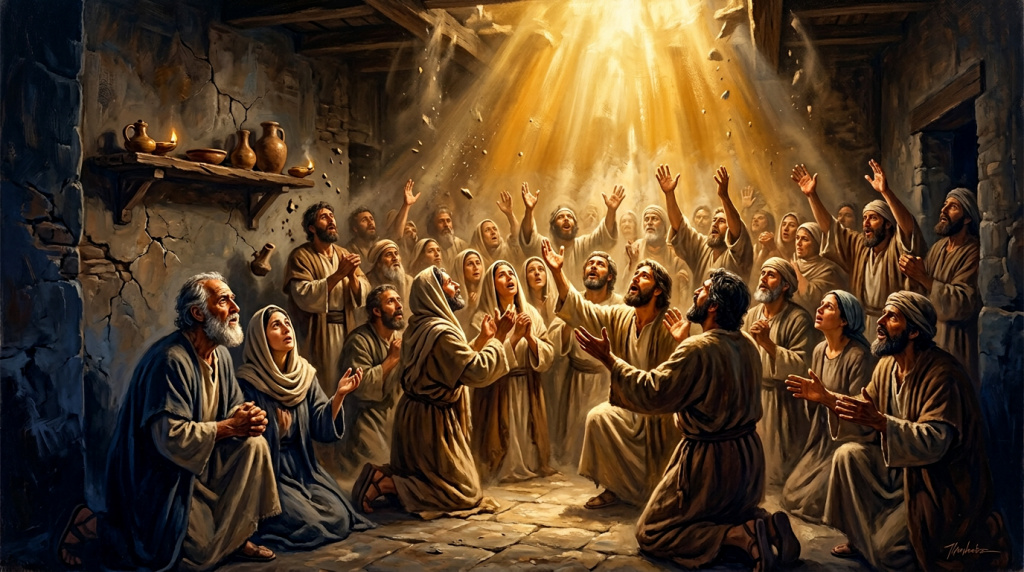
That is exactly where we find the church in Acts 6. Last week we watched the apostles stand before the most powerful court in the land and refuse to stop preaching, rejoicing that they were counted worthy to suffer for Jesus’ name. The gospel could not be stopped from the outside. But now a different kind of test arrives — one that comes from the inside, not from enemies but from the church’s own success. And how the church handles it will either tear it apart or push the mission forward.
A Complaint No One Should Ignore
Luke sets the scene plainly: “Now at this time while the disciples were increasing in number, a complaint arose” (Acts 6:1). Notice the timing. The trouble came because the church was growing. More people meant more needs, and one group of needs had slipped through the cracks.
Here is what happened. The early church cared for its widows, providing a daily share of food to those who had no one else to provide for them. But two groups of believers worshiped side by side in Jerusalem. There were the Hebraic Jews, who spoke Aramaic and had grown up in the land. And there were the Hellenistic Jews — believers who spoke Greek and had come from other parts of the world. And the widows from that second group were “being overlooked in the daily serving of food” (Acts 6:1).
Sit with that word overlooked. No one had decided to be cruel. No one had made a rule to leave them out. They were simply forgotten — the easy thing that happens to people on the edges, the ones who look different or sound different from the majority. But the church did not wave the complaint away. They took it seriously, because the people on the margins matter to God.
The Greek word for the “serving” of food here is diakonia — the same root that gives us our word deacon. Keep that word in your mind, because in just a moment it is going to show up again in a surprising place.
A Decision That Set the Right Priorities
The twelve apostles called the whole church together and said something that might sound shocking at first: “It is not desirable for us to neglect the word of God in order to serve tables” (Acts 6:2).
Was feeding widows beneath the apostles? Not at all. Caring for the poor is holy work that God loves. The point was not that the task was too small for them. The point was that their calling was something else. If the apostles spent their days managing the food line, the preaching and teaching of God’s word would suffer. And a church that loses the word of God loses everything.
So they made a wise choice. They did not try to do it all themselves. They delegated. They handed the practical ministry to others so they could hold onto their own God-given assignment: “But we will devote ourselves to prayer and to the ministry of the word” (Acts 6:4).
That word “devote” is the Greek proskartereō — it means to hold fast, to give yourself steadily and stubbornly to something. It is the same word used back in Acts 2:42, where the first believers “devoted” themselves to the apostles’ teaching and to prayer. Pastors and elders are not called to do every job in the church. They are called to give themselves, without distraction, to prayer and to the Scriptures, so the whole body is fed.
And here is the beautiful thing. When the apostles described their own work, they called it the “ministry of the word” — and the Greek phrase is diakonia again. Serving tables is diakonia. Preaching the word is diakonia. In God’s church, there are no big jobs and little jobs. It is all service. It is all sacred. The Lord who washed feet (John 13) does not rank His servants the way the world does.
Servants Chosen from the Overlooked
The apostles told the church to pick seven men who were “of good reputation, full of the Spirit and of wisdom” (Acts 6:3). Notice the bar. These were not just men with free time or business skills. They had to be known for their character, filled with the Holy Spirit, and full of wisdom. Practical ministry is still spiritual ministry, and it takes Spirit-filled people to do it well.
Then comes a detail that is easy to read right past. Look at the seven names the church chose: Stephen, Philip, Prochorus, Nicanor, Timon, Parmenas, and Nicolas (Acts 6:5). Every single one of those is a Greek name. The complaint had come from the Greek-speaking believers who felt overlooked — and the church responded by choosing leaders from that very group, even a man named Nicolas who had come to the faith from outside Israel altogether.
Think about how wise and humble that is. The majority group did not say, “We’ll fix your problem our way.” They put the overlooked people in charge of the very ministry where they had been overlooked. That is what gospel love looks like across racial and cultural lines. In Christ “there is neither Jew nor Greek” (Galatians 3:28), and here that truth gets feet and hands. A healthy church does not just tolerate people who are different — it shares leadership with them.
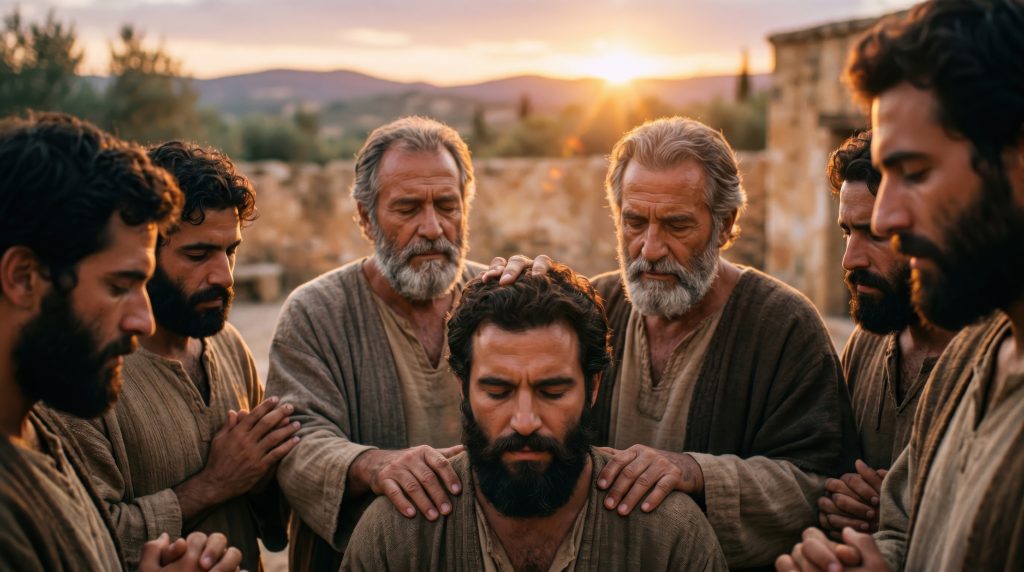
The apostles prayed and laid their hands on these seven, setting them apart for the work. The pattern we see here became a lasting gift to the church: alongside those who preach and pray, God raises up qualified servants to care for the practical needs of His people (1 Timothy 3:8–13).
The Result: The Word Spread
Watch what happened next: “The word of God kept on spreading; and the number of the disciples continued to increase greatly in Jerusalem, and a great many of the priests were becoming obedient to the faith” (Acts 6:7).
Do not miss the connection. When the apostles guarded their calling and the church raised up servants to meet real needs, the gospel did not slow down — it sped up. Even priests, the most religiously hardened group you could imagine, started coming to faith. Good order in the church is not red tape; it clears the road for the word of God to run.
And one of those seven servants, a man “full of faith and of the Holy Spirit,” was named Stephen. Hold onto that name. Next week we will see this humble table-server become a bold preacher whose witness shook the city. God was about to use a man the world would have called “just a deacon” to do something unforgettable.
For Reflection
Take some quiet time this week with these questions. You might write down your answers or talk them over with someone you trust.
- Is there a person or group in your life — or in your church — who is being “overlooked”? What would it look like to notice them the way God does?
- The apostles protected their calling by saying no to good things so they could say yes to their best thing. Where in your life do you need that kind of wise no?
- The passage treats serving food and preaching the word as equally sacred service. Have you ever thought of practical service as “lesser”? How does that change today?
- The church shared leadership with the very people who felt left out. Where might God be calling you to hand over influence, not just help?
- What is one practical need in your church you could meet this week — quietly, faithfully, as service to Jesus?
A Week in the Word
Walk through this passage and its roots one day at a time. Read slowly, and ask God where He is calling you to serve.
- Monday — Acts 6:1–7: A conflict met with servant leadership.
- Tuesday — Mark 10:35–45: Jesus, who came not to be served but to serve.
- Wednesday — Exodus 18:13–26: Jethro teaches Moses to share the load.
- Thursday — 1 Timothy 3:8–13: The character of those who serve the church.
- Friday — Acts 2:42–47: A church devoted to prayer and the Word.
- Saturday — Galatians 3:26–29: One in Christ across every human line.
- Sunday — Acts 6:8–15: Looking ahead — Stephen, full of grace and power, steps forward.
A Call to Respond
Friend, if you have never trusted Jesus, this little story holds good news for you. The God of the Bible is a God who notices the overlooked. He saw the forgotten widows, and He sees you. You may feel like you are on the edge, unseen and unimportant — but Jesus left the glory of heaven to serve, and then to die, for people exactly like you and me. He took the lowest place so that you could be welcomed in. Turn from going your own way, trust Him, and you will never be overlooked again. If that is your heart, reach out to me or one of our leaders. We would be glad to walk with you.
And to those who already follow Christ: the church does not run on a few professionals while everyone else watches. It runs on Spirit-filled people who quietly serve. Stop waiting to be asked. Look for the need no one is meeting, and meet it. Notice the person no one is noticing, and love them. The Lord who sees in secret is building something beautiful through ordinary servants — and He is inviting you to be one.
We would love to worship beside you this Sunday at 11:00 AM at Priceville Baptist Church as we open Acts 6 together.
A church that serves like Jesus is a church that cannot be split — and a church the word of God keeps right on growing.
Scripture quotations are taken from the New American Standard Bible (NASB), 1995 Update.