
Boldness Under Pressure: When the Church Prays for Courage Instead of Comfort

This article is adapted from Sermon 10 in our forty-week expository journey through the Book of Acts.
What do you pray for when everything falls apart?
Most of us pray for relief. We pray for the problem to go away, for the pressure to lift, for the storm to pass. And there is nothing wrong with that. God invites us to bring our burdens to Him. But in Acts 4:13–31, the earliest church faces a genuine crisis — the authorities have threatened the apostles and ordered them to stop speaking in the name of Jesus — and the prayer they pray is not what you might expect.
They do not ask God to remove the threat. They do not ask for safety. They do not ask for a change of circumstances.
They ask for boldness to keep speaking.
That prayer, and the way God answers it, might be the most important model of corporate prayer in the entire New Testament. And it has everything to say to a church that is tempted to play it safe.
The Sanhedrin’s Problem
Last week we watched Peter stand before the Sanhedrin and declare that salvation is found in no one else but Jesus Christ. We saw Peter’s Spirit-filled courage and the stunning claim of Acts 4:12. But the story does not end with Peter’s sermon. The Sanhedrin still had to decide what to do with these men.
Luke tells us in Acts 4:13 that when the council observed the confidence of Peter and John — the Greek word is parrēsia, meaning boldness, openness, fearless speech — and realized that they were uneducated and untrained men, they were amazed. Then they recognized something that sent a chill through the room: these men had been with Jesus.
That phrase carries more weight than it might appear. These were the same authorities who had orchestrated Jesus’ crucifixion. They thought the movement was finished. And now, standing in their courtroom, were two of His followers — exhibiting the same authority, the same unflinching courage, the same disregard for political consequences that had made Jesus such a threat in the first place.
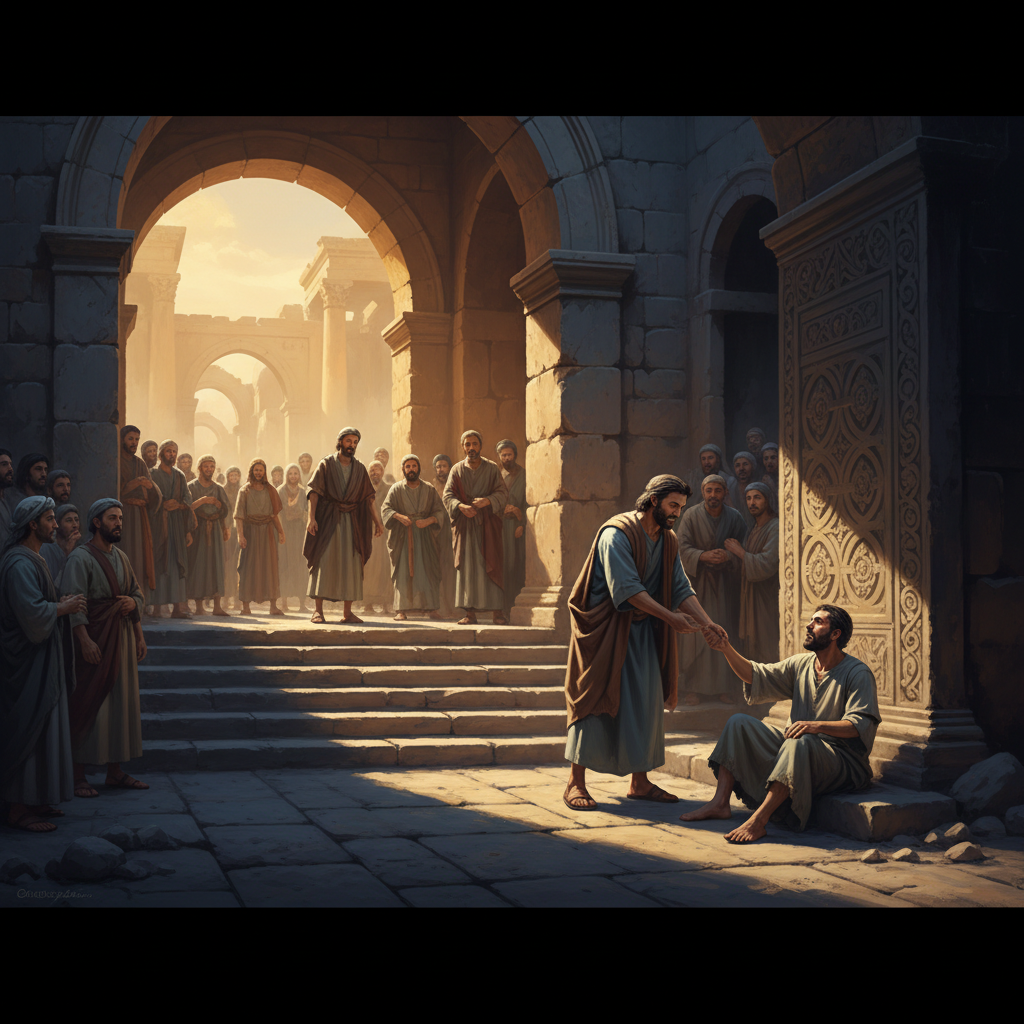
And there was another problem: the healed man was standing right there (v. 14). The evidence was undeniable. A man who had been crippled for over forty years was on his feet, healthy, and everyone in Jerusalem knew about it. The Sanhedrin could not deny the miracle. They could only try to contain it.
The Threat: Stop Speaking This Name
In verses 15–18, the council confers privately and then issues their ruling: Peter and John are ordered not to speak or teach at all in the name of Jesus.
Notice what is happening. The most powerful religious body in Israel is attempting to silence the name that saves. They cannot disprove the resurrection. They cannot deny the healing. So they resort to the only tool they have left: intimidation. Stop talking, or there will be consequences.
Peter and John’s response in verses 19–20 is one of the most courageous statements in Scripture: “Whether it is right in the sight of God to give heed to you rather than to God, you be the judge; for we cannot stop speaking about what we have seen and heard.”
This is not reckless defiance. This is principled obedience. Peter is not saying, “We don’t respect authority.” He is saying, “When human authority contradicts divine authority, we obey God.” He is appealing to a higher court — the court of heaven — and telling the Sanhedrin that they need to weigh their own position before God.
And then he says something deeply personal: “We cannot stop speaking about what we have seen and heard.” This is not theology in the abstract. Peter is a witness. He saw Jesus die. He saw Jesus alive. He watched a lame man leap. You cannot unsee those things. And once you have seen them, silence is not an option.
The Prayer That Changed Everything
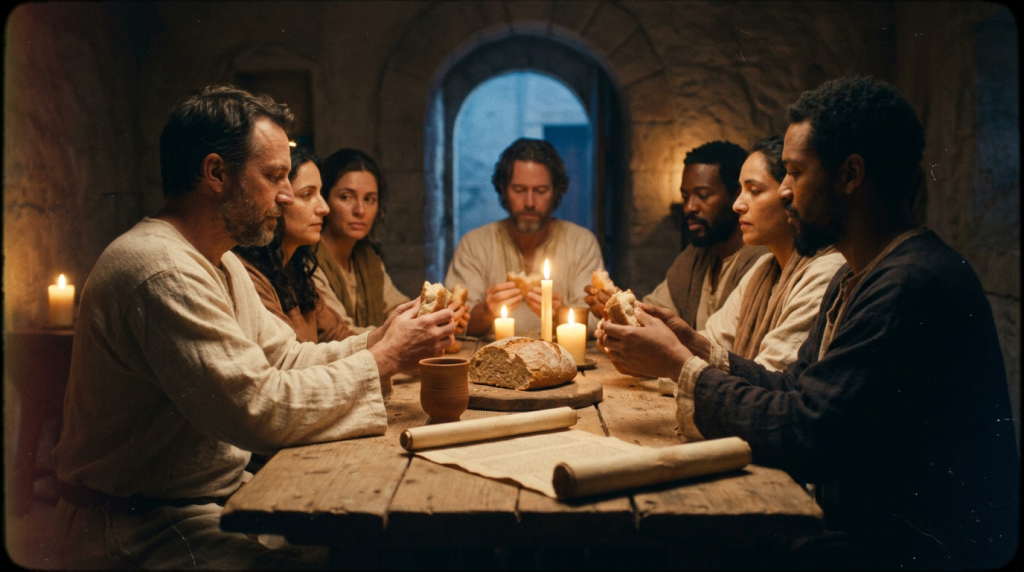
When Peter and John are released, they return to the church and report everything the chief priests and elders said to them. And the church prays.
The prayer recorded in Acts 4:24–30 is remarkable for what it includes and what it leaves out.
It begins with worship. “O Lord, it is You who made the heaven and the earth and the sea, and all that is in them.” Before they ever mention their problem, they remind themselves of who God is. He is the Creator. He made everything. The same hands that shaped the universe are the hands that hold their lives. Starting with God’s sovereignty puts every earthly threat in perspective.
Then they turn to Scripture. They quote Psalm 2:1–2: “Why did the Gentiles rage, and the peoples devise futile things? The kings of the earth took their stand, and the rulers were gathered together against the Lord and against His Christ.” This is not random. They are reading their own situation through the lens of God’s Word. The rage of the nations against God’s anointed is not new. It is ancient. It is predicted. And it is futile.
Then comes the theological heart of the prayer in verses 27–28: “For truly in this city there were gathered together against Your holy servant Jesus, whom You anointed, both Herod and Pontius Pilate, along with the Gentiles and the peoples of Israel, to do whatever Your hand and Your purpose predestined to occur.”
Read that again carefully. The church is saying that the most evil act in human history — the crucifixion of the Son of God — happened according to God’s predestined plan. Herod, Pilate, the Gentile soldiers, the Jewish crowds — they all acted freely, they all bore moral responsibility, and yet everything they did was within the boundary of what God’s hand and purpose had already determined.
This is the doctrine of divine sovereignty applied in real time, under real pressure, by real believers who are facing real threats. And it gives them an unshakeable foundation. If God was sovereign over the cross — the worst thing that ever happened — then God is sovereign over whatever the Sanhedrin might do to them. No threat falls outside His plan.
The Ask: Not Safety, But Boldness
And now comes the request. After all that worship, all that Scripture, all that theology — what do they actually ask for?
Acts 4:29–30: “And now, Lord, take note of their threats, and grant that Your bond-servants may speak Your word with all confidence, while You extend Your hand to heal, and signs and wonders take place through the name of Your holy servant Jesus.”
They ask God to look at the threats. Not to remove them. Not to punish the Sanhedrin. Not to airlift the apostles to safety. They ask God to take note — to see what is happening — and then to give them boldness to keep speaking anyway.
This is a prayer that redefines what it means to trust God. Most of us, if we are honest, pray for the circumstances to change. The early church prayed for the courage to keep going regardless of the circumstances. They did not ask for an easier road. They asked for stronger legs.
And they asked for God to continue working — healing, performing signs and wonders — through the name of Jesus. The very name the Sanhedrin had just banned is the name they are asking God to glorify even more.
God’s Answer: The Room Shook
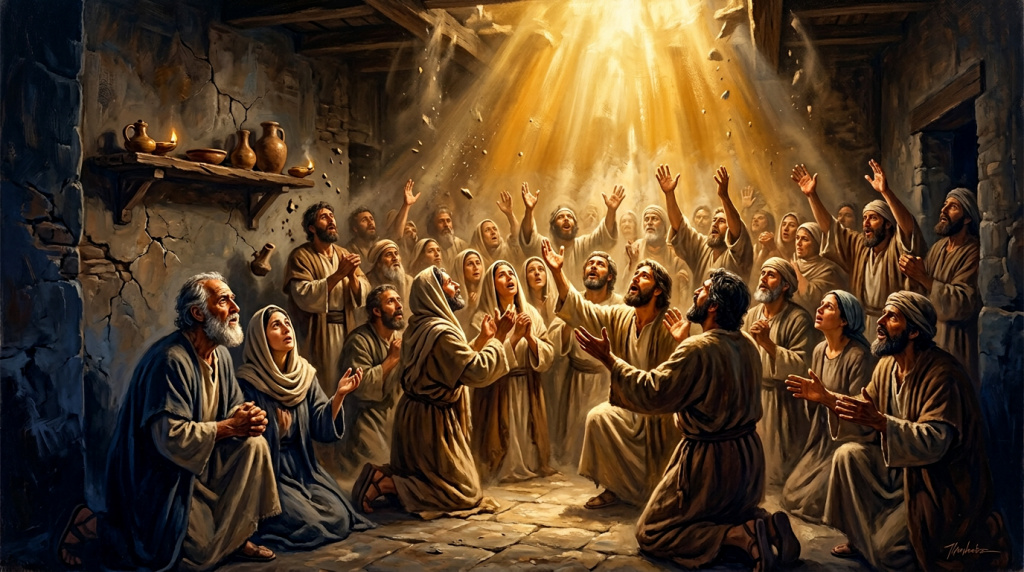
Verse 31 is one of the most dramatic moments in the entire book of Acts: “And when they had prayed, the place where they had gathered together was shaken, and they were all filled with the Holy Spirit and began to speak the word of God with boldness.”
God does not answer with a whisper. He answers with an earthquake. The building shakes. The Spirit fills every person in the room. And they go right back out and do the very thing the Sanhedrin told them not to do — they speak the word of God with boldness.
This is the pattern: prayer produces filling, and filling produces proclamation. The church does not generate its own courage. It receives courage from God through prayer. And when God gives it, nothing — not threats, not jail, not the most powerful court in the nation — can shut them up.
A Moment for Reflection
1. When I face opposition or pressure, what is my first instinct — to pray for relief or to pray for boldness? Be honest with yourself. There is no shame in wanting the pressure to stop. But the early church models a different kind of prayer — one that trusts God’s sovereignty enough to ask for courage instead of comfort.
2. Do I start my prayers with worship or with my problems? The church in Acts 4 began by declaring who God is before they ever mentioned what was happening to them. What would change in your prayer life if you started with God’s character instead of your crisis?
3. Do I really believe that God is sovereign over my hardest circumstances? The early church believed that God’s hand and purpose governed even the crucifixion of Jesus. Can you trust that same sovereignty over the situation that is pressing on you right now?
4. Is there an area where I have chosen silence over faithfulness? Peter said, “We cannot stop speaking about what we have seen and heard.” Is there a place in your life — work, school, family, neighborhood — where you have gone quiet about Jesus because the cost felt too high?
Suggested Scripture Readings for the Week
Monday: Acts 4:13–31 — Read the full passage slowly. Pay attention to the structure of the prayer.
Tuesday: Psalm 2:1–12 — The psalm the early church quoted in their prayer. Read it as they read it — as a promise that God’s anointed King will triumph over every opposition.
Wednesday: Ephesians 6:18–20 — Paul asks the church to pray that he would speak the gospel with boldness. Notice the echo of Acts 4:29.
Thursday: Daniel 3:16–18 — Shadrach, Meshach, and Abednego refuse to bow, trusting God’s sovereignty whether He rescues them or not.
Friday: Philippians 1:12–21 — Paul in prison discovers that his chains have advanced the gospel. Pressure becomes a platform.
Saturday: Isaiah 41:10–13 — “Do not fear, for I am with you; do not anxiously look about you, for I am your God.”
Sunday: Revelation 2:10 — “Be faithful until death, and I will give you the crown of life.”
Your Call to Action This Week
1. Pray the Acts 4 prayer. This week, use the structure of Acts 4:24–30 as your daily prayer template. Start with worship (who God is), move to Scripture (what God has said), affirm sovereignty (God is in control), and then ask for boldness (not relief). Try it for five days and see what changes.
2. Identify one place you have gone silent. Is there a relationship, a workplace, or a community where you have stopped talking about Jesus because the environment felt hostile or uncomfortable? Name it. Then ask the Holy Spirit for courage to speak again — not recklessly, but faithfully.
3. Pray with someone else. The Acts 4 prayer was corporate — the whole church prayed together. This week, ask one other believer to pray with you specifically for boldness in witness. Two people praying for courage is more powerful than one person worrying alone.
4. Trust God’s sovereignty over one specific pressure. Write down the thing that is pressing on you the hardest right now. Then write Acts 4:28 underneath it: God’s hand and God’s purpose are at work even here. Carry that paper with you this week as a reminder.
You’re Invited
Join us this Sunday, May 17, 2026, at 11:00 AM as Pastor Chris Carter continues our journey through the book of Acts with “Boldness Under Pressure: Praying for Courage” from Acts 4:13–31.
Priceville Baptist Church 713 North Feemster Lake Road | Tupelo, Mississippi 38804
If you are facing pressure — at work, at home, in your faith — this message is for you. The same God who shook the room in Acts 4 is still answering prayers for boldness. Come and ask Him.